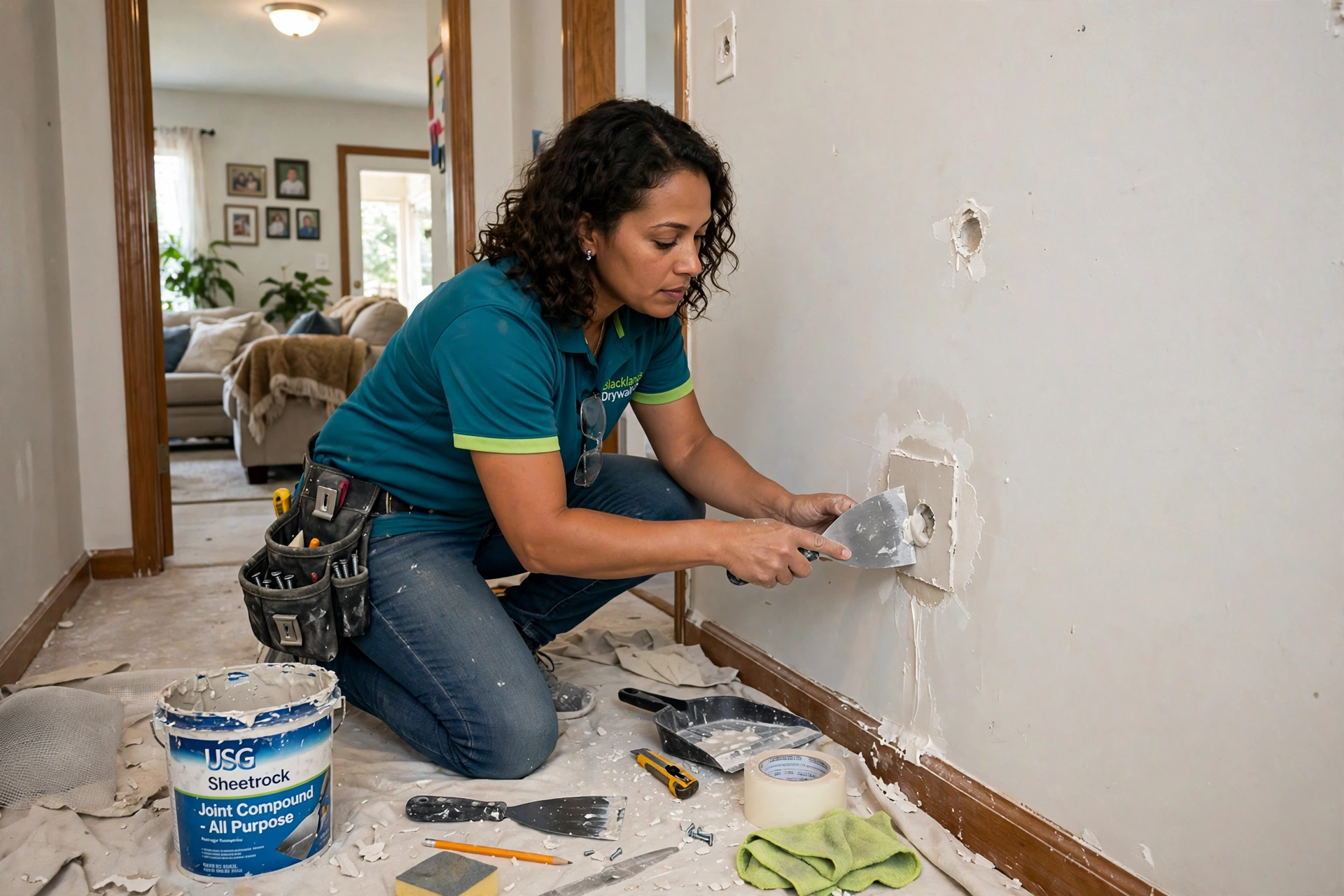
The short answer: small, purely cosmetic water stains on drywall that's already fully dry and structurally sound are genuinely within reach for a confident DIYer - sand, prime with a stain-blocking primer, texture-match, paint. Anything involving actual saturation, soft or sagging drywall, suspected mold, ceilings, or an insurance claim is where professional work earns its cost - not because DIY is impossible, but because the margin for a costly mistake is high and some of it (ceiling collapse risk, mold exposure, claim documentation) carries real consequences beyond "it doesn't look great." If you're unsure which category you're in, call Blacklands Drywall Co. at (214) 494-8955 - a quick phone description often settles it.
Why This Question Deserves an Honest Answer, Not a Sales Pitch
Every drywall contractor's website has an incentive to say "always call a pro." We're not going to do that, because it isn't true, and homeowners who research this topic can tell when they're being steered rather than informed. Some water-damage drywall situations are legitimately simple. Others look simple and aren't. The goal of this guide is to help you tell the difference - honestly.
Good Candidates for DIY
If your situation checks most of these boxes, a confident, patient DIYer can reasonably tackle it:
- The drywall is already dry. Not "feels dry" - actually dry, ideally confirmed with time and good airflow, with no return of staining or softness after drying out fully. (If you're not sure, our guide on how long drywall takes to dry covers how drying is actually verified.)
- The damage is small and cosmetic. A stain from an old, resolved leak - the kind left behind after a one-time event that's been fixed and is definitely not recurring.
- The drywall is firm, with no sogginess, crumbling, or give when you press it.
- It's on a wall, not a ceiling. Wall patches carry far lower risk than ceiling work - no overhead weight, no collapse concern.
- There's no musty smell and no visible discoloration beyond the original water stain itself.
- You're not filing an insurance claim on this damage, or the claim is already settled and closed.
For this category, the DIY path looks roughly like: clean and lightly sand the stained area, apply a stain-blocking primer (this step matters - regular primer won't stop a water stain bleeding back through fresh paint), texture-match if needed, then paint. Our guide to [how to tell if drywall needs replacement](/blog/tell-drywall-needs-replacement-water-damage) walks through the firmness and visual tests that confirm you're in safe DIY territory before you start.
When Professional Work Is the Right Call
These situations have real stakes beyond cosmetic results, and that's where the case for professional work gets strong:
Any ceiling work involving sagging or saturation. This isn't about skill level - it's about weight and collapse risk. A waterlogged ceiling section can fail without warning, and DIY removal from underneath puts you directly in the fall path. Our [sagging ceiling emergency guide](/blog/sagging-ceiling-drywall-water-emergency-steps) explains why this category is non-negotiable.
Suspected or visible mold. Beyond the 48-hour mold risk window, cutting into or disturbing mold-affected material without containment can spread spores through your HVAC system and living space. This is a genuine health and air-quality issue, not just a cosmetic one - and in Texas, any mold remediation job affecting 25 contiguous square feet or more legally requires a state-licensed mold remediation contractor. We don't perform mold remediation ourselves; if your situation needs it, we'll tell you plainly and point you toward a properly licensed specialist rather than attempting drywall repair over an active mold problem.
Drywall that's soft, crumbling, or significantly saturated. Beyond a certain saturation point, the gypsum core has lost structural integrity and removal-and-replacement is the only real fix - DIY "repair" on compromised material just delays the inevitable while potentially hiding ongoing moisture or mold behind a fresh paint job.
You're filing an insurance claim. This is a less obvious but important reason to involve a professional even for moderate damage. Insurance adjusters respond to documented, measured scope - moisture meter readings, professional assessment, a written scope of work. A homeowner's photos and description carry less weight than a contractor's documentation, and DIY repair before the adjuster sees the damage can actually complicate your claim. Our [insurance claims guide](/blog/insurance-claims-water-damaged-drywall) covers this in detail.
Multi-room or structural-adjacent damage - burst pipes, flood cuts, anything touching framing or insulation. The scope and hidden-damage risk (water traveling further than visible) make professional moisture mapping genuinely valuable, not just a formality.
You're not sure what's behind the wall. If you haven't opened it up and don't know whether there's wet insulation, hidden mold, or compromised framing, that uncertainty itself is a reason to get a professional assessment before committing to either path.
The Real Risks of DIY-ing a Situation That Needed a Pro
This is where the honesty matters most. The risks aren't hypothetical scare tactics - they're specific and real:
- Sealing in moisture. Painting over drywall that looks dry but isn't fully dry traps moisture against the gypsum core and behind the paint film, creating ideal mold conditions in a space you can no longer see or monitor.
- Missing hidden mold. A surface that looks clean can have mold growing in the wall cavity behind it. DIY repair addresses the visible surface and leaves the actual problem in place, often making it worse by trapping it.
- Structural failure during work. Attempting to remove a sagging, saturated ceiling section yourself risks exactly the collapse the drywall was already threatening - but now with you underneath it.
- Weakened repairs that fail again. Drywall "repaired" over compromised framing or insulation looks fine until the next humidity swing or minor leak reveals the underlying problem was never fixed.
- Insurance complications. Repairing before documentation, or repairing in a way that doesn't match what the adjuster needs to see, can create friction or reduce what a claim pays out.
- Health exposure. Disturbing mold-affected material without containment and proper protective measures is a real, not theoretical, health consideration for anyone in the home.
None of this means every DIY attempt ends badly. It means the downside risk in the "should've called a pro" category is categorically different from "the paint color's slightly off" - it's structural, health-related, or financial, not just cosmetic.
A Simple Decision Framework
Ask yourself these questions in order:
- Is any of this a ceiling, and is it sagging? If yes → call a professional immediately. This isn't a judgment call.
- Is there a musty smell, visible mold, or has it been wet for several days? If yes → professional assessment first, before any repair attempt.
- Is the drywall soft, crumbling, or does it flex under light pressure? If yes → it needs replacement, which is more involved than a DIY patch typically handles well.
- Will you be filing an insurance claim? If yes → get professional documentation before you touch anything.
- Is it small, dry, firm, odorless, and on a wall? If you've made it here with all yeses → DIY is a reasonable option.
When in Doubt, a Phone Call Costs Nothing
If you're genuinely unsure which category your situation falls into, describing it over the phone to a professional is free and fast. Tell us the size, location (wall or ceiling), how it happened, whether it's dry, and whether you smell anything musty. We'll give you an honest read - including telling you "that sounds like a fine DIY job" when it genuinely is. We'd rather build trust with accurate advice than manufacture work that wasn't needed. Call Blacklands Drywall Co. at (214) 494-8955.
Bottom line: DIY and professional repair aren't rival philosophies - they're the right tool for different situations. Small, dry, cosmetic damage on a wall is fair game for a careful homeowner. Anything involving ceilings, mold, saturation, or insurance carries real stakes that tip the balance toward professional work. When you're not sure which side of that line you're on, ask - it's a free phone call either way.