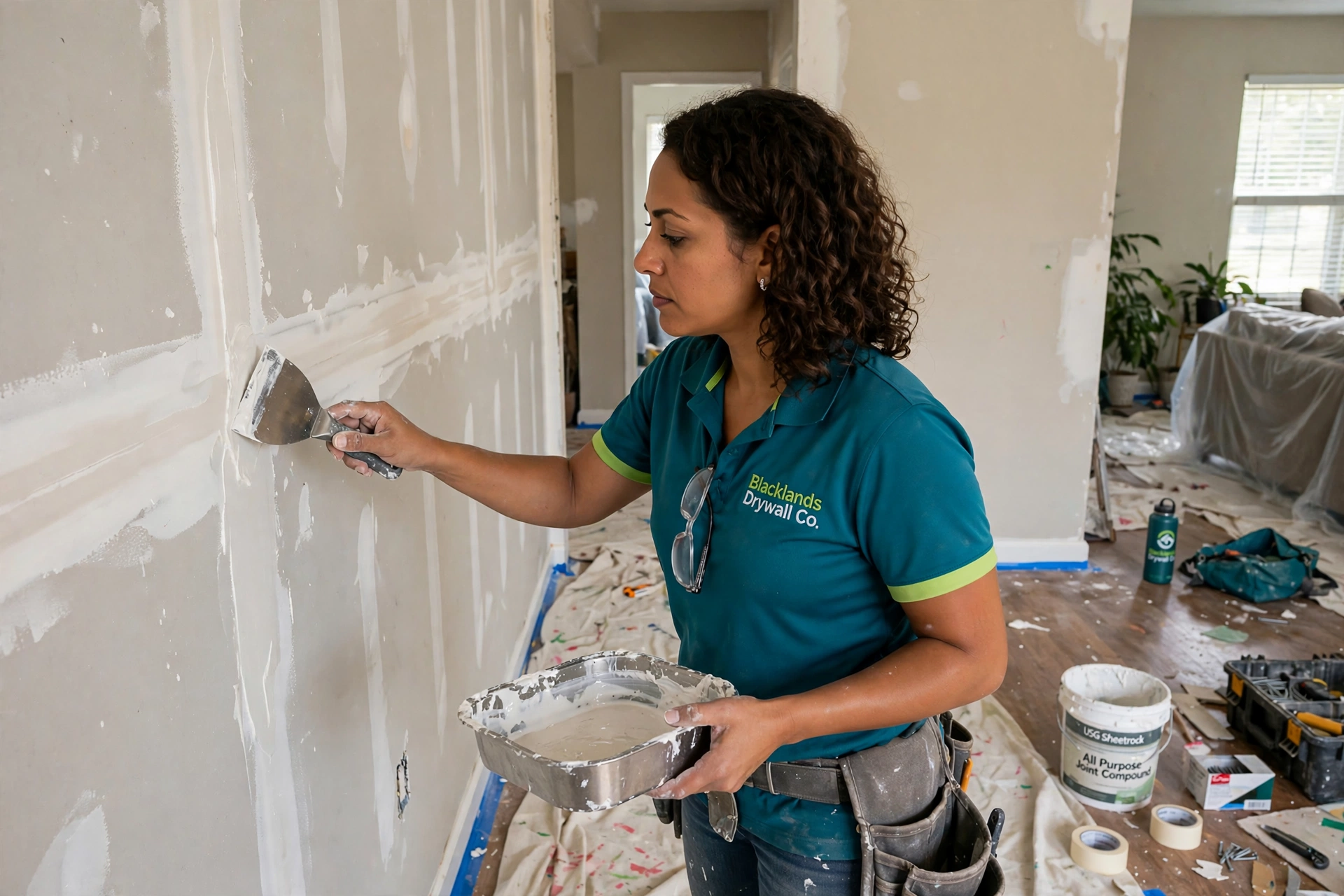
The short answer: texture is usually the single biggest giveaway that a wall's been repaired - not the seam, not the paint, the texture. Matching it means identifying the pattern type (orange peel, knockdown, popcorn, smooth, hand-applied), matching the tool and technique that created it, and blending the edges so there's no visible line where old meets new. It takes practice and the right equipment, and even then, lighting can reveal a mismatch that looked fine in the shop light. For texture-matched water-damage repairs in Rockwall, call Blacklands Drywall Co. at (214) 494-8955.
Why Texture Is the Part People Notice Most
Here's the frustrating truth about drywall repair: the tape, mud, and sanding can be flawless - perfectly flat, perfectly smooth - and the repair will still stand out like a spotlight if the texture doesn't match. That's because texture isn't decoration; it's a pattern your eye is already calibrated to. Walk into any room and your brain has unconsciously mapped the wall's surface rhythm. A smooth patch on a textured wall, or a texture that's slightly finer or coarser than the surrounding area, registers as "wrong" even to someone who couldn't describe why.
This is also why texture matching gets skipped or rushed more than any other step - it's genuinely difficult, it takes a different skill set than taping and mudding, and a rushed job can look acceptable under a flashlight inspection and then glaringly obvious under afternoon sun raking across the wall at an angle.
The Common Texture Types (and Why Each Is Tricky)
Not all textures are created the same way, and each has its own matching challenge:
Orange peel. A fine, stippled texture resembling citrus peel, usually sprayed on with a hopper gun at a specific air pressure and mud consistency. The challenge: orange peel varies enormously by how it was sprayed - too thick, too thin, too close, too far, all change the look. Matching an existing orange-peel wall means recreating the original installer's exact spray settings, which takes test patches and adjustment, not a single pass.
Knockdown. Orange peel that's been "knocked down" with a trowel while still wet, flattening the peaks into a mottled, stucco-like pattern. The challenge: timing. Knock it down too early and it slides into a different pattern; too late and the peaks have set and won't flatten properly. Matching knockdown means matching both the spray pattern underneath and the exact timing of the knockdown pass.
Popcorn (acoustic). The bumpy ceiling texture common in homes built before the 1990s. The challenge: popcorn texture products have changed over the decades, older ceilings may contain asbestos (more below), and matching an aged, slightly yellowed popcorn ceiling with fresh material is visually difficult even when the pattern itself is right.
Smooth/skip trowel. Hand-applied texture using a trowel in varying patterns - common in higher-end homes. The challenge: this is the most hand-dependent texture type. Every installer's trowel technique is slightly different, which means matching someone else's hand-applied texture requires genuinely replicating their motion, not just their tool.
Smooth (no texture). Sounds like the easy one - no texture to match. In practice, "smooth" walls still have a factory-flat sheen and reflectivity that a hand-sanded patch can struggle to replicate exactly, especially under raking light. Smooth walls hide seams worse than textured ones, ironically, because there's no pattern to break up a slightly uneven plane.
A Critical Safety Note: Popcorn Ceilings and Asbestos
If your home was built before the early 1990s and has an original popcorn ceiling, there's a real possibility the texture contains asbestos - it was a common additive in acoustic ceiling texture until regulations phased it out. This matters directly for water-damaged popcorn ceilings, because:
- Disturbing (scraping, cutting, sanding) asbestos-containing texture without proper precautions can release fibers into the air, which is a genuine health hazard.
- You cannot tell by looking whether a given ceiling contains asbestos - it requires lab testing of a sample.
- If your water-damaged ceiling has original popcorn texture and the home's age puts it in the risk window, testing before any removal or repair work is the responsible step.
We're not an asbestos abatement company, and we won't pretend to be. If a water-damaged ceiling needs texture work and there's reasonable suspicion of asbestos-containing material, the right move is testing first, and abatement by a licensed specialist if it comes back positive - before any drywall repair proceeds. This is one of the clearest cases where "call a specialist" isn't a legal formality, it's a real safety matter.
How Professionals Approach a Texture Match
- Identify the exact pattern. Close inspection of the existing texture - spray pattern, knockdown timing, trowel direction, texture density - before touching anything. Photos of the undamaged area near the patch serve as the reference throughout the job.
- Test patch first. On a scrap piece of drywall or an inconspicuous area, the matching texture is tested and compared against the real wall before committing. This step is what separates a careful match from a guess - adjustments to mud consistency, spray pressure, or trowel technique happen on the test piece, not on your wall.
- Feather the edges. The transition zone between old and new texture is blended gradually rather than ending in a hard line. This is true even with a good pattern match - an abrupt edge is visible regardless of how well the pattern itself matches.
- Check under multiple light conditions. A match that looks perfect under a shop light can show a seam under raking natural light (light hitting the wall at a low angle, which exaggerates any texture or flatness difference). Professionals check the patch area at different times of day or with a raking light test before calling it done.
- Prime before judging color/sheen match, since raw drywall mud reads differently than primed and painted surface - the final paint coat is what reveals whether the texture blend is truly invisible.
When Texture Matching Isn't Practical (and What to Do Instead)
Sometimes a perfect blend-in match isn't realistic - a texture pattern has changed over decades, the original installer's technique can't be reverse-engineered, or the repair area is large enough that partial blending won't disappear. In these cases, honest options include:
- Re-texturing the full wall or ceiling plane, rather than just the patch - this guarantees uniformity because everything gets the same fresh texture, at added cost and labor.
- Accepting a close-but-imperfect match in a low-visibility area (inside a closet, behind furniture placement) where the tradeoff of cost versus visibility favors a good-enough match.
- For ceilings specifically, re-texturing the full ceiling is often the practical answer anyway, since ceiling texture mismatches are especially visible under any light source mounted in or near the ceiling plane.
A contractor who tells you upfront "this patch will need the whole wall re-textured to truly disappear" is giving you useful information, not upselling you. The alternative - a visible patch they didn't warn you about - is the actual bad outcome.
What This Means for Your Water Damage Repair
Texture matching isn't a separate afterthought from drywall repair - it's the step that determines whether your repair looks like a repair or looks like nothing happened. When we quote water-damage drywall work, texture assessment is part of the scope from day one: identifying the pattern, planning the blend strategy, and being upfront if full-plane re-texturing is the more honest answer than a patch-and-pray approach.
Bottom line: The tape and mud get the wall structurally sound; the texture match is what makes it disappear. It's a slower, more deliberate process than most homeowners expect, and it's the difference between a repair you can point to and one nobody would ever notice.