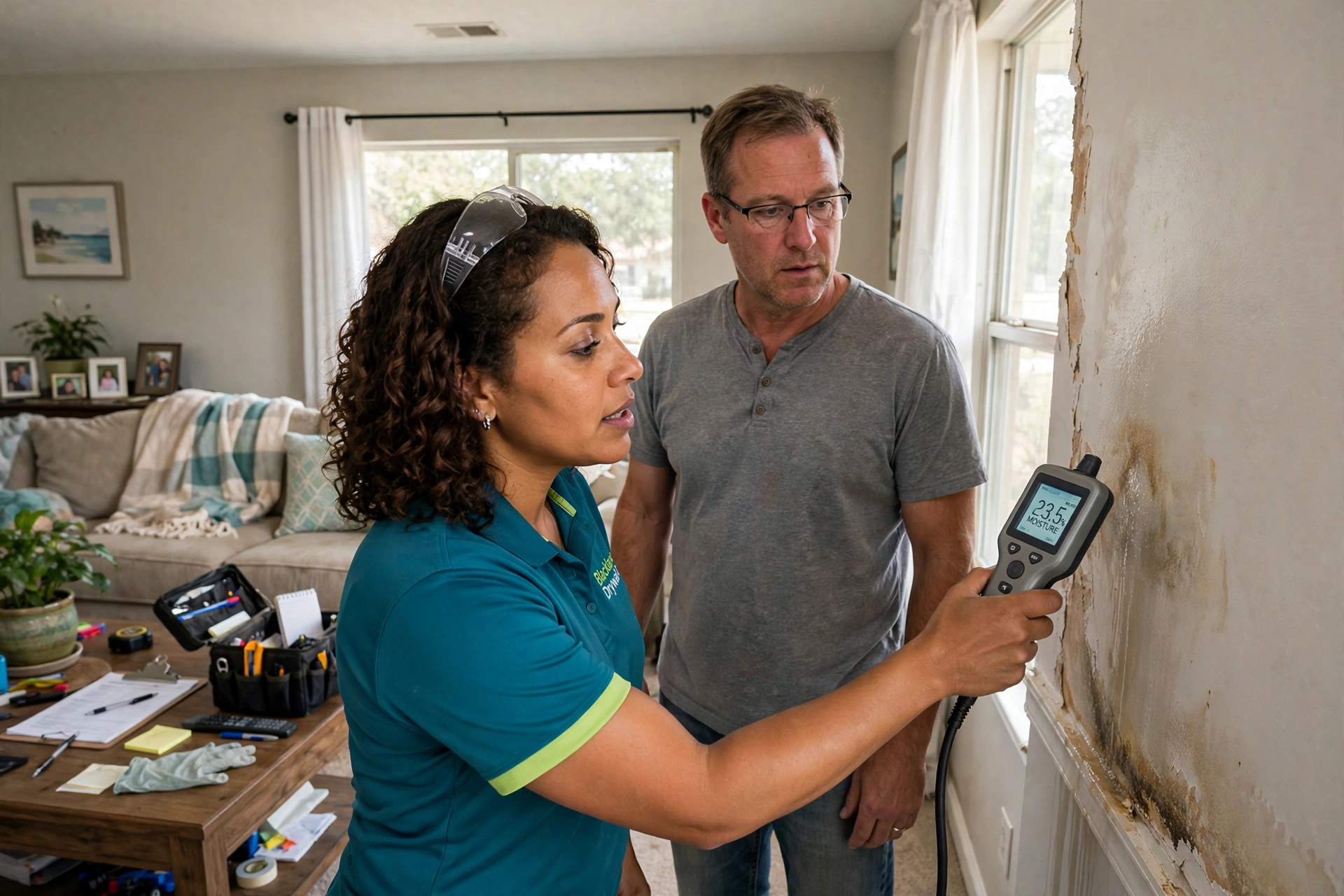
The short answer: yes, wet drywall can often be repaired - dried in place, then refinished - but only when it's still firm, the water was clean, and it hasn't been wet long. When drywall is soft, moldy, contaminated, or long-soaked, replacement is the only correct fix. The most expensive mistake is choosing wrong in either direction: replacing what could've been dried wastes money, and patching what should've been replaced fails and costs you twice. Here's the exact decision framework professionals use. For your specific situation, call Blacklands Drywall Co. at (214) 494-8955.
What "Repair" and "Replace" Actually Mean
The words get thrown around loosely, so let's define them the way the trade does:
Repair (dry and refinish) means the existing drywall stays on the wall. It's dried thoroughly with professional equipment, verified dry with moisture readings, then sealed, textured, and repainted. Nothing is demolished. The drywall you had is the drywall you keep.
Replace (remove and install new) means the damaged sections are cut out and discarded, the wall cavity is inspected and dried, new drywall is hung, seams are taped and mudded, texture is matched, and the surface is primed and painted. It's a bigger job with more steps - and when it's the right call, it's the only call.
There's also a middle path - partial replacement. A flood cut removes just the damaged lower portion of a wall (typically two feet up from the floor) while the healthy upper drywall stays. It's replacement, but surgical rather than total. Most real-world jobs land here, not at the extremes.
Understanding these three options matters because the question isn't really "repair or replace?" - it's "which of these three does my drywall actually need?"
The 5 Questions That Decide It
Professionals don't guess. They work through five questions in order, and the answers point to the right option:
1. Is the drywall still structurally sound?
Press it. Firm and rigid means the gypsum core survived - repair is on the table. Soft, spongy, or crumbly means the core has broken down, and no amount of drying restores structural integrity. This single test eliminates the most wrong answers. (Our article on how to tell if drywall needs replacement covers all five homeowner tests in detail.)
2. What kind of water was it?
Clean water (burst supply pipe, rain intrusion) keeps the repair option alive. Grey water (appliance overflows, drain backups) usually pushes porous drywall into the replacement column - contaminants don't dry out. Black water (sewage, floodwater) ends the discussion: affected drywall comes out, full stop. The water's category can override every other factor.
3. How long was it wet?
Under 48 hours with clean water and firm drywall: repair is often viable. Several days: the odds tilt toward replacement, because gypsum degrades with continued saturation and mold risk climbs. Weeks or unknown duration: plan on replacement of the affected areas, because long-term wetness compromises drywall even when the surface looks acceptable.
4. Is there mold - or the conditions for it?
Visible mold on drywall means that section comes out; you don't dry and paint over mold. A persistent musty smell with no visible growth means something is happening inside the cavity - that wall needs to be opened and assessed before anyone declares it repairable. Widely published guidance notes mold can begin growing on wet drywall within 24–48 hours, which is why the clock in question 3 matters so much.
5. Where is the damage?
Walls are forgiving; ceilings are not. Wet wall drywall that's still firm is a reasonable repair candidate. Wet ceiling drywall that's sagging or bowing is a replacement - gravity has already made the structural decision, and waterlogged ceiling drywall is a safety hazard during removal. Location also affects cost: overhead replacement work runs higher than wall work for the same area.
Answer all five honestly and the right option usually becomes obvious. Mixed answers - firm drywall but a musty smell, clean water but a week of wetness - are when a moisture-meter inspection earns its keep.
When Repair (Drying) Is the Right Call
All of these should be true:
- Drywall feels firm and solid throughout the affected area
- The water was clean
- Wetness lasted under roughly 48 hours
- No musty odor, no visible mold
- It's a wall, not a compromised ceiling
The repair process then looks like this: the water source is confirmed stopped, professional drying equipment (air movers plus dehumidification - not just a box fan) brings moisture content down, readings verify the wall is actually dry through its full thickness, the surface is sealed with stain-blocking primer, texture is touched up, and the area is repainted. Done right, the drywall performs exactly as it did before - because structurally, it never failed.
When Replacement Is Required
Any one of these makes replacement the correct call:
- Soft, spongy, or crumbling drywall. The core is gone. Drying can't rebuild gypsum.
- Visible mold growth on the drywall. Contaminated porous material comes out.
- Grey or black water exposure. Contaminants rule out salvaging.
- Sagging or bowing ceilings. Structural failure plus safety risk.
- Long-duration wetness. Weeks of saturation degrade drywall beyond recovery, even if it feels okay on the surface.
- Failed previous repair. If a past patch or paint-over is bubbling, peeling, or staining through, the underlying drywall was never properly addressed. Doing the same thing again isn't a plan.
The replacement process: damaged sections are cut out in clean lines, the cavity is inspected (wet insulation removed, framing dried and verified), new drywall is hung and finished, texture is matched to the surrounding surface, and everything is primed and painted. More steps, more material - and when it's warranted, the only durable fix.
The Middle Path: Partial Replacement
Most water damage doesn't ruin entire walls - it ruins the bottom two feet, or one section of ceiling. The flood cut is the trade's answer: a straight horizontal cut, typically 24 inches up from the floor, removing only the damaged lower portion. The healthy upper drywall stays. New drywall fills the cut, seams are finished, baseboards go back on, and the wall looks untouched.
Partial replacement is often the best value in water-damage work: you get new, sound drywall exactly where the old failed, without paying to replace what survived. It's also why the "repair vs. replace" framing is slightly misleading - the real answer is frequently "replace the ruined part, keep the rest."
The Cost Logic of the Decision
Repair costs less than replacement - fewer labor hours, no demolition, no new material, simpler finishing. That's straightforward. What's less obvious is the cost of choosing wrong:
Replacing drywall that could have been dried wastes the price difference for nothing. You paid for demolition, disposal, new sheets, and full refinishing on drywall that was structurally fine. It's money spent with zero improvement in outcome.
Repairing drywall that should have been replaced is worse. The patch fails - tape bubbles as residual moisture moves, stains bleed through the new paint, texture cracks over the weakened core, and mold keeps growing inside the sealed cavity. Then you pay for the replacement anyway, on top of the failed repair, plus remediation of whatever grew in the meantime. The cheapest repair is the one you only pay for once.
This is why honest contractors are careful with this decision, and why you should be wary of anyone who defaults to one answer for every job. "We always replace" wastes your money. "We can save anything" risks your walls. The right contractor's answer starts with a moisture meter, not a sales pitch.
How the Decision Gets Made During an Inspection
Knowing the framework helps you evaluate the inspection itself. Here's what a proper assessment looks like:
- History. When did you notice it? What was the water source? Has it been repaired before?
- Moisture mapping. Meter readings across and beyond the visible damage - this defines the true scope, which is almost always larger than the stain.
- Firmness testing. The press test, section by section, mapping where drywall is sound and where it's compromised.
- Source verification. Confirming the leak is stopped - because the dry/replace decision is meaningless over an active leak.
- The verdict, explained. Dry it, remove it, or replace it - stated plainly, with the evidence shown to you: the soft spot, the meter readings, the reasoning.
If a contractor skips to a quote without these steps, they're pricing a guess. The five questions above are your checklist for whether the inspection was real.
Timeline: What Each Path Takes
Repair path: drying takes 2–5 days of equipment run time depending on saturation and conditions (our article on how long wet drywall takes to dry breaks this down), then a day or two for sealing, texture touch-up, and paint. Roughly a week, mostly waiting on drying and curing.
Replacement path: demolition and cavity work in a day or two, drying verification, then new drywall, taping, and mudding across multiple visits (joint compound needs drying time between coats), then texture and paint. Typically one to two weeks for a standard job.
Neither timeline compresses safely. Drying can't be rushed without trapping moisture; mudding can't be rushed without cracked seams. Anyone promising a full replacement in two days is skipping steps you'll pay for later.
Bottom line: Wet drywall isn't automatically ruined - but it isn't automatically saveable either. Firm, clean-water, recently-wet drywall: repair it. Soft, contaminated, long-soaked, or sagging drywall: replace it. Everything in between: inspect it properly before deciding, because the most expensive word in this business is "probably."